
Are customers finding your business before your competitor's? If you're a local owner or marketing lead who feels invisible in search results, frustrated by wasted ad spend, or worried your online presence doesn't match the quality of your service, Local Business Signals can help you cut through the noise with focused, measurable fixes that actually move the needle.
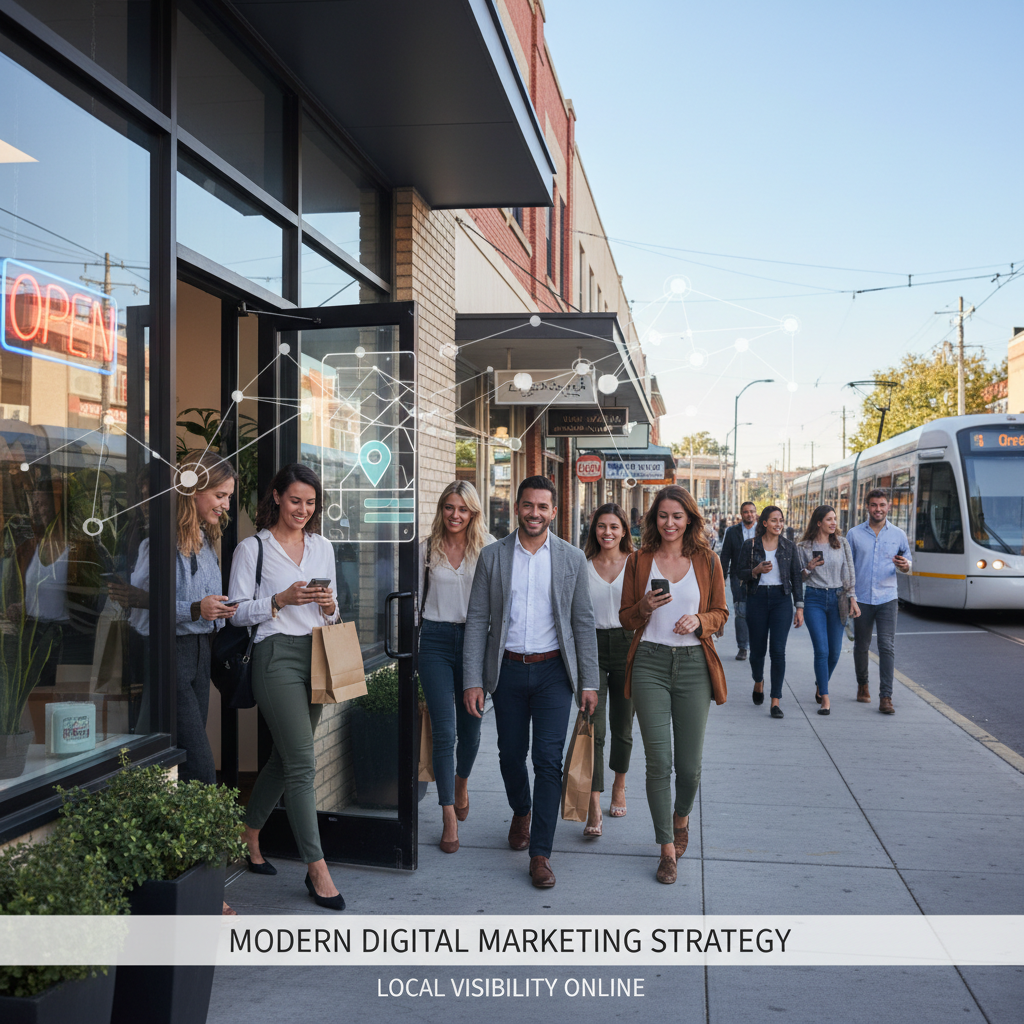
Local Visibility Starts Where Customers Search
Local business visibility isn't an abstract metric - it's the difference between a full calendar and an empty one. Google Business Profile, Apple Maps, and key directories are where intent turns into action, so you need those listings accurate, optimized, and active. I've noticed clients who claimed "we're listed everywhere" often had 3 conflicting phone numbers across platforms (yes, really). That costs you conversions.
How to fix it? Audit your Name-Address-Phone (NAP) first, then standardize citations, add best-practice categories, and schedule weekly posts to your profile (short, local-focused updates work). If this feels overwhelming, Local Business Signals can run the audit and maintain profiles so you get steady lifts in map rankings and calls.
How do I improve my Google Business Profile right now?
Verify ownership, fill every field, add 12+ quality photos, collect 50 reviews over time, answer reviews within 48 hours, and publish offers or posts weekly. Do that and you'll see measurable improvement in local pack placements.
A Modern Digital Marketing Strategy Prioritizes Search Intent
You can't just throw keywords on a page and expect results anymore. A winning digital marketing strategy starts with intent mapping - matching pages to queries like "open now near me", "price of X in [city]", or "best [service] near [neighborhood]".
So here's the deal - do keyword research, yes, but also build content that answers the actual question users typed. Create service pages for neighborhoods, FAQ sections for micro-intent, and blog posts addressing common objections (pricing, turnaround time, guarantees). Content supports organic visibility and feeds ads for better Quality Scores.
What content should local businesses prioritize?
Start with: 1) Localized service pages, 2) A clear pricing or pricing-range page, 3) A reviews/testimonials hub, 4) FAQ pages answering transactional queries, and 5) 2-3 monthly local-focused articles tied to events or seasonal demand.
Online Presence Is Measured by Trust Signals, Not Just Traffic
Traffic is vanity unless visitors convert. Trust signals are what make them convert: reviews, trust badges, customer photos, transparent policies, and local backlinks. I've seen conversion rates double just by adding 87 customer photos and a visible business license badge on the booking page. No joke.
Get reviews on the platforms your customers actually use. For most local shops that's Google, Facebook, and Yelp. Respond to negative feedback fast (apologize, offer a fix), and use positive reviews as social proof across your site and ads. Local Business Signals helps orchestrate reputation campaigns so you get consistent, authentic reviews without gaming the system.
How many reviews should I aim for?
A practical target is 50 reviews on Google for a strong local signal, plus 20-30 across other directories. The point isn't just count - it's recency and response rate.
Technical Foundations Make Your Online Presence Work
So your content might be brilliant, but if your site loads slow, or it's painful on mobile, people bail. Page speed, mobile-first layouts, structured data (localBusiness schema), and secure hosting are the plumbing that makes marketing efforts pay off. From what I've seen, local sites that reach sub-2.5 second load times on mobile see better organic rankings and higher conversion rates.
Run Core Web Vitals checks, add schema to your contact and service pages, and make phone numbers clickable. Use a simple content delivery network when you can - it costs a little but saves a lot in lost leads.
How fast should my site load for local SEO?
A good goal is under 2.5 seconds on mobile for the landing pages that drive calls or bookings. Faster is better; test after every major change.
Data-Driven Local Advertising Multiplies Organic Gains
Paid channels shouldn't be an island. Smart advertisers use local ad campaigns to accelerate organic momentum: promote high-converting service pages, retarget recent site visitors, and geo-fence competitor locations (ethically). Measure by calls, bookings, and lifetime value, not just clicks.
Look, paid local ads can get expensive if you don't track attribution. Use call tracking, UTM-tagged landing pages, and offline conversion imports to connect spend to revenue. Local Business Signals can set up campaigns that feed real data back into your digital marketing strategy so you stop guessing and start scaling profitably.
Which channels give the best local leads?
Most local businesses see results from Google Search and Maps ads, Meta local campaigns, and industry-specific platforms like Yelp or Thumbtack. Test one channel at a time, measure cost per lead, then double down on winners.
You Don't Have To Do This Alone - Start With Quick Wins and Scale
Here's a practical 30-day sprint you can do: 1) Audit and fix NAP inconsistencies, 2) Optimize your top 3 service pages for local intent, 3) Publish 2 review-request campaigns, and 4) Improve one key page's load time. Do that and you'll create visible momentum fast.
And if you're strapped for time, Local Business Signals can implement the sprint while you run the business. We handle the repetitive stuff (citations, monitoring, ad attribution) so you can focus on serving customers. Honestly, it's like hiring a mechanic for your marketing engine - you don't have to do everything yourself, but you need someone who knows how to tune it.
Ready to make your online presence actually drive bookings and sales? Start with the audit, prioritize local signals, and iterate based on real data. The businesses that act fast and focus on trust, intent, and technical health are the ones winning local markets in 2026.